


Being a Church School
Our Christian Vision
We will send the children out, as Noah did the dove (Genesis 8:8-12), having nurtured and prepared them for life. Knowing that they are valued they can fly and take the values of the school out into the world.
Our vision was written with contributions from members of the school community and launched in 2018/2019 as part of the 10th Birthday celebration of Towcester C of E Primary School. It incorporates the dove from the story of Noah which has become our school logo.
We aspire for all of our children to flourish as a consequence of the teaching and opportunities they experience at our school. We wish for them all to 'fly' from our school as happy, confident, resilient people who will want to fulfil their lives by taking further opportunities.
Our Christian Values
Our six school values are central to all that we do at Towcester. These ‘umbrella values’ incorporate a list of subtly different values and qualities that, we believe, guide and support us in our approach to daily life.
Children are taught about living our school values, they are celebrated for showing our values in both their school life and in their lives outside of school.
Each value is linked to a story from the Bible, enabling all pupils to draw inspiration from scripture to deepen their understanding of how our values can be used in their lives.
Compassion
empathy, tolerance, forgiveness, humility, kindness and care.
The story of ‘The Good Samaritan’, Luke 10: 25 – 37
We want our children to understand how to feel and show compassion in a sincere way, to be able to forgive, to show tolerance of others and to demonstrate care and kindness to fellow humans both close to home and across the world. We want their compassion to extend to a care for their world and their environment.
Courage
confidence, perseverance, resilience, endurance, courageous advocacy, truth and honesty.
The story of ‘David and Goliath’, 1 Samuel; from Verse 17
We want our children to be ‘brave’ to try new things without the fear of failure; to be confident in themselves, their beliefs and values; to be honest with themselves and others and to have the courage to make good choices and to do what they believe is right. We want them to have resilience in all aspects of life, to persevere when things are challenging and to know that hard work is recognised and rewarded.
Fellowship
friendship, community, koinonia, belonging, respect, inclusion and partnership.
The story of ‘Jesus heals the Paralytic’, Luke 5: 17 - 26
We want our children to feel part of their community understanding that each individual contributes to the whole and that the interdependence of everyone working together develops strength. We want our children to flourish in the knowledge that they are contributing to a larger whole, all striving for the same goal, to feel a sense of true belonging, inclusion and partnership.
Hope
joy, peace , trust, optimism, faith
The story of ‘Parable of the Mustard Seed’, Matthew 13: 31-32
We want our children to believe that there are opportunities that everyone can take and their actions and choices will allow them to flourish. We want them to believe that, even when things feel hard or challenging, that these times will pass. We want them to feel a trust in God that He will guide them and bring them joy and peace and light in their lives. We want our children to have hope in their own lives and for others, locally, nationally and internationally; hope for a better world.
Wisdom
making wise choices, self-control, tolerance and a love of learning.
The story of ‘Wise and Foolish Builders’, Matthew 7; 24 – 27
We want our children to be considered, to be able to reflect and reason and make wise choices. We want their wisdom to inform their life choices and their understanding of how to live well in our world. We want them to love learning and gaining knowledge and understanding, but to use all of this with wisdom. We want them to be able to live life in all of its fullness.
Thankfulness
gratitude, awe and wonder, joy, generosity.
The story of The Loaves and Fishes, Feeding the Five Thousand: John 6: from verse 8
We want our children to show appreciation for their world and all that they have within it. To be able to marvel at things with a sense of awe and wonder. To be able to feel joy in simple things, to appreciate relationships and friendships and how they are cared for and loved. To appreciate their abilities, talents and freedoms. To be thankful for all of the opportunities available to them. Through their appreciation, we want them to be able to both give and receive generously and appreciatively.
Strong Links with St Lawrence Church
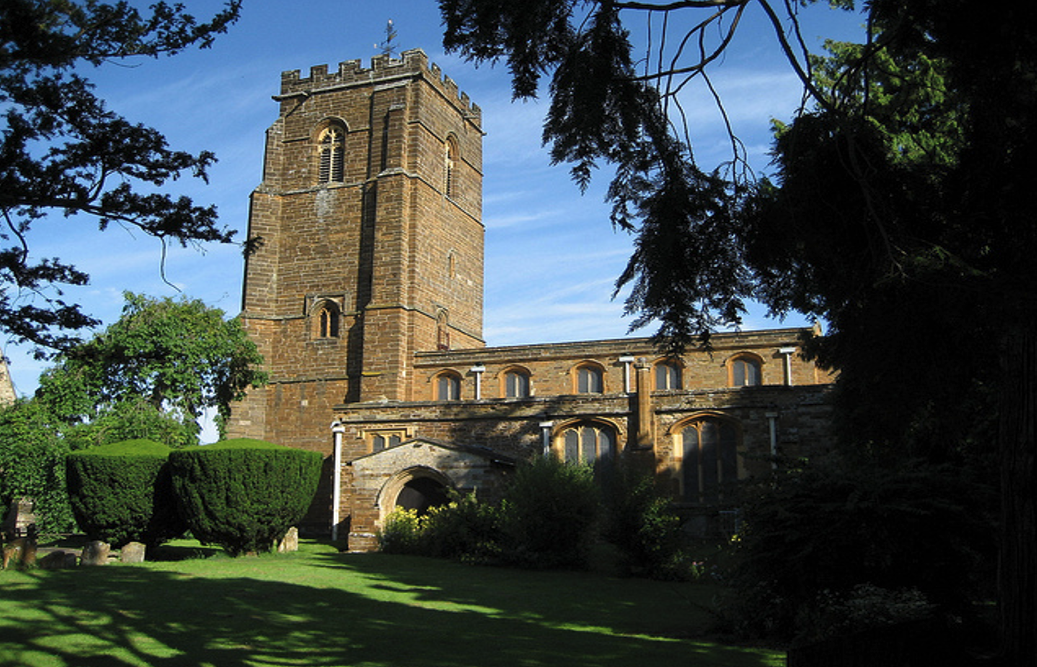
As a Church School we have a Christian ethos and strong links with St Lawrence Church in Towcester. Being a Church of England School is very important to us. We serve our community regardless of their faith, culture or belief. We follow the vision of the Church of England and deliver education that shows 'life in all its fullness'.
We regularly attend Church for key Christian festivals and to celebrate both the beginning and end of the school year. Our Foundation Stage pupils perform the Nativity each Christmas and the school is involved in Holy Week. Services led by our pupils for Harvest, Christingle, Christmas and Easter are held in the Church each year.
Throughout the year, different year groups lead the monthly Family Service at St Lawrence Church. The Benefice Children and Families Worker visits school and prepares the service with the children of each year group. They take on key roles including readings, welcoming, leading our prayers and helping with the collection. Our children support the congregation with singing some of the songs we sing in school too.
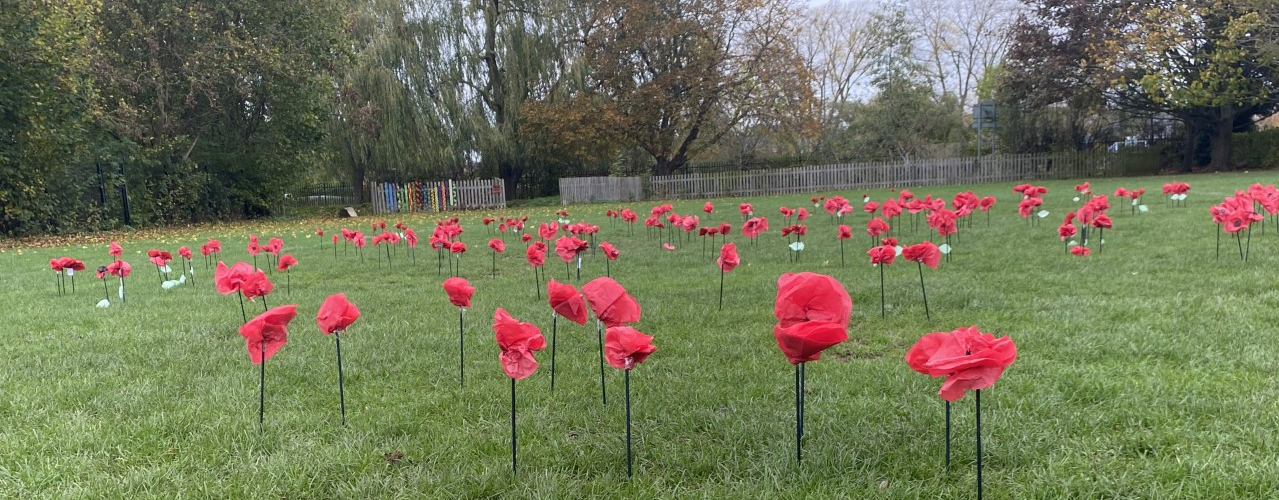
Parents, friends and members of the community are invited to join our worship at these special times of year. Our pupils also lead an annual Remembrance Service which takes place on the school field, we are joined each year by members of the Royal British Legion who join us in leading the service. Each child makes a large red poppy which is planted on the field.
The children stand amongst the poppies during the service which is always well attended by parents and the wider community. The poppies remain on display on the field for Remembrance Day.
We contribute to the Church Christmas Tree festival each year and involve ourselves with other community groups linked with the Church. Our community and sense of belonging is very strong, families are invited to join us in our celebrations and services both at school and in Church.
Reverend Paula leads our services and comes into school regularly, leading our whole school Collective Worship and working with specific year groups to do a variety of activities with groups of children.
More information about the Tove Benefice can be found here:
Collective Worship
‘Collective Worship at Towcester is excellent. It is centred around the school’s Christian vision and enables stillness, joyfulness and empowerment through biblical teachings. Leaders have created a dynamic special time which is highly valued by the whole school community. They find deep meaning through Christian teachings and celebrate the fullness of life that God intended.’
SIAMS Report, 2022
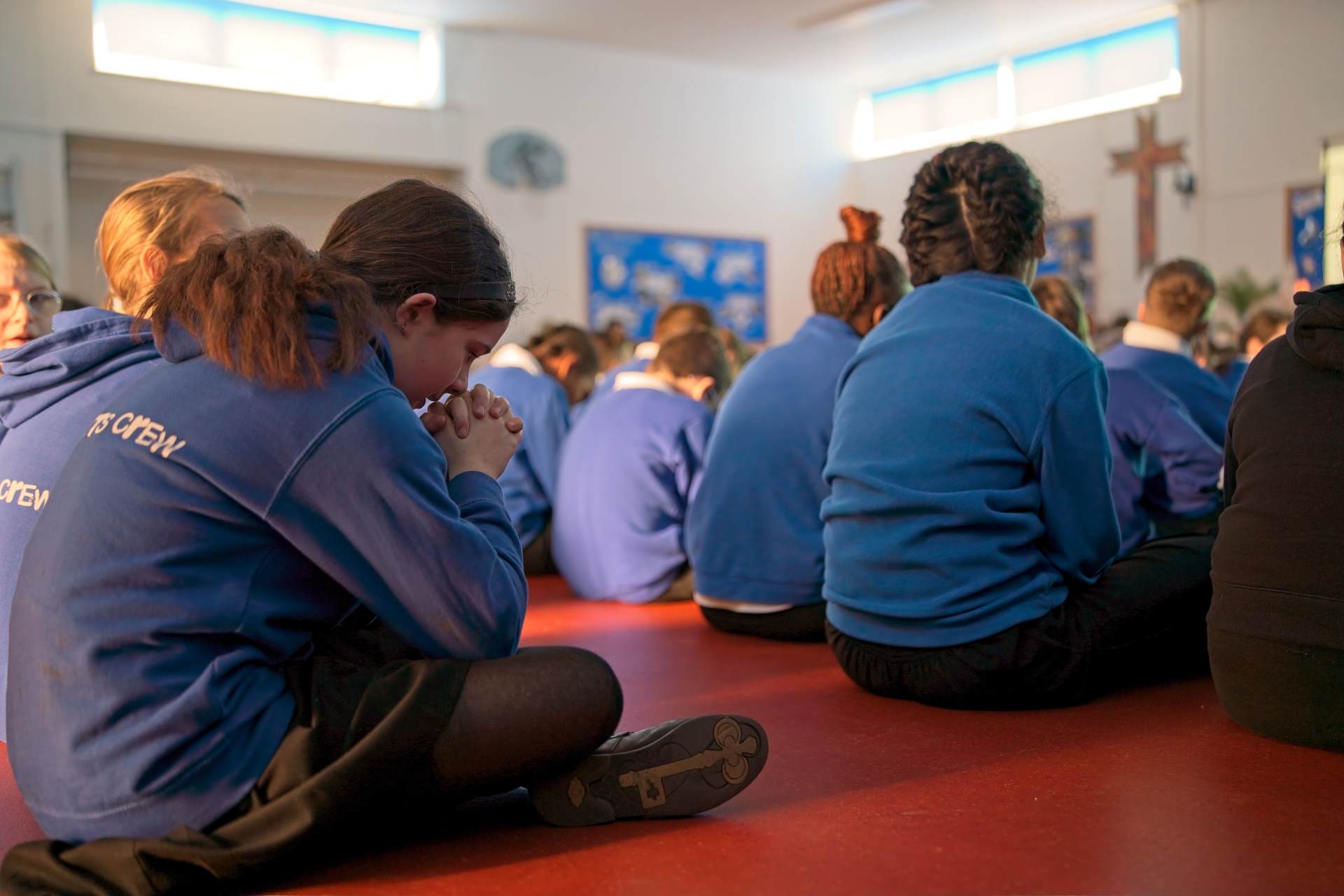
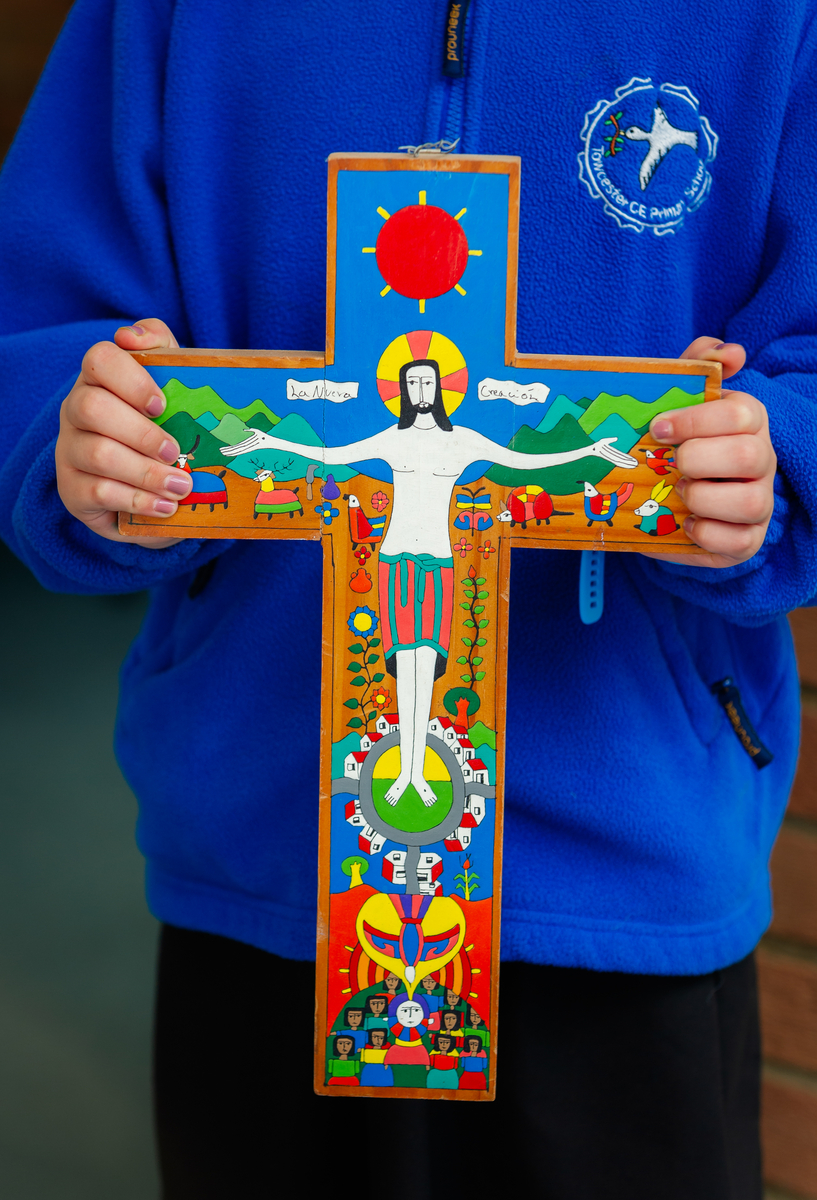
Collective worship is central to our school day. Collective Worship offers our community the opportunity to experience and explore their spirituality. Pupils participate in prayer and song; worship offers a time for stillness, silence and reflection. We create an appropriate atmosphere by using music and a cross and candles that act as a focal point for the attention of the pupils.
We explore different values and themes throughout the school year. Our collective worship is in three parts: Learn, Reflect and Respond. During each worship, we learn about a topic or idea, reflect how this knowledge informs us in our lives and then respond by taking our learning out into our daily lives. A follow up activity is set to encourage children to develop their thoughts, responses and understanding of this learning idea.
All our worship includes these key elements :
- An altar table with appropriate liturgical coloured cloth
- The lighting of candles to represent the Trinity
- Call and response, led by our worship leaders
- A main discussion point or story
- Silent reflection time
- Prayer
- Blowing out of candle
- A Christian song or a song that illustrates our values
We regularly invite visitors to lead our collective worship. Some tell Bible stories through painting or pictures, others inspire children through music or story. Other assemblies are taken by teachers and visitors from the local community discussing values or sharing with the children about an aspect of life to open up their world and experience.
Our collective worship leaders open each collective worship by welcoming the school community together and encouraging them to ‘Learn Reflect and Respond’. Pupils are invited to join in prayer or to use the time as quiet reflection time.
School collective worship opening and closing responses are also used in the St Lawrence Family Service opening and closing responses. This helps pupils to feel comfortable in their worship in both church and school.
‘Collective worship is transformational in the daily life of the school. Worship is exceptional because it is inclusive and seen as a conversation with God. As a result, pupils have a deep and meaningful connection to God through prayer. Here, they ask him questions and hear his answers. Vibrant, joyful singing is a key part of daily collective worship which everyone finds deeply moving and uplifting. Christian teachings within worship have a real impact on the school community. They help to promote the vision and secure the atmosphere of loving care and support for one another.’
SIAMS Report, March 2022
Prayer at Towcester
Opportunities for prayer and reflection are given at lunchtimes and in classes at the end of each academy day. Prayer and reflective spaces are available in all classrooms, places where children can quietly reflect, access Bible stories and prayer books.
Themed prayer spaces are set up around the school, prompting children to reflect and create prayers in different ways and forms. These are based on different themes both personal and on a global scale.
Religious Education at Towcester C of E Primary
At Towcester C of E Primary School, Religious Education plays a significant role in the promotion of spiritual, moral, cultural and mental development, preparing learners for the opportunities, responsibilities and experiences of later life. It helps them to become successful learners, confident individuals and responsible citizens.
Intent:
The principal aim for RE is:
“To enable pupils to hold balanced and informed conversations about religion and belief”.
This principal aim includes the following objectives for the provision of RE in Church Schools (Statement of Entitlement, 2019) in which pupils are expected to:
- know about and understand Christianity as a diverse global living faith through the exploration of core beliefs, using an approach that critically engages with biblical text;
- gain knowledge and understanding of a range of religions and worldviews, appreciating diversity, continuity and change within the religions and worldviews being studied;
- engage with challenging questions of meaning and purpose raised by human existence and experience;
- recognise the concept of religion and its continuing influence on Britain’s cultural heritage and in the lives of individuals and societies in different times, cultures and places;
- explore their own religious, spiritual and philosophical ways of living, believing and thinking.
Implementation:
The Diocese of Peterborough RE Syllabus is designed to support schools and academies in developing and delivering excellence in RE. It sets out an approach to teaching and learning through which pupils learn about core concepts in religions and beliefs in a coherent way. This in turn develops both their understanding and their ability to hold balanced and informed conversations about religions and beliefs.
The syllabus is underpinned by three core elements (Text / Beliefs, Impact and Connections) which are woven together to provide breadth and balance within teaching and learning about religions and beliefs, thus supporting the aims of RE.
The Understanding Christianity Resource is delivered as our main approach to teaching children about Christianity.
Religious Education is taught weekly as a discrete subject. As a Church of England school, we prioritise the teaching of Christianity. Further units of study provide in-depth, systematic coverage of three other major religions; Islam, Hinduism and Judaism. Children also examine other religious beliefs and non-religious world views such as Humanism. Thematic units of work encourage children to consider a range of themes; for example, Festivals or Commitments, from the perspective of a range of religions and worldviews. Children compare and contrast the practices within these themes in the context of each religion’s beliefs.
The RE units of study are all based on pupils developing a response to a ‘Big Question’ . Question-based and lessons are planned which allow children to be active, reflective and expressive in their handling of questions about beliefs, religion, spirituality and values. We aim to include elements of enquiry, analysis, interpretation, evaluation and reflection within our lessons.
We use a varied range of teaching and learning strategies in order to make Religious Education engaging and challenging for all pupils. These include:
- whole class lessons,
- pair and group discussions,
- drama,
- role-play,
- ICT,
- visits,
- outside speakers,
- audio-visual stimuli,
- artwork and
- the use of religious artefacts.
Impact:
At the end of their education in Church Schools, the expectation is that all primary pupils are religiously literate and able to:
- give a theologically informed and thoughtful account of Christianity as a living and diverse faith;
- show an informed and respectful attitude to religions and non-religious worldviews in their search for God and meaning;
- engage in meaningful and informed dialogue with those of other faiths and none;
- reflect critically and responsibly on their own spiritual, philosophical and ethical convictions.
Religious Education must be provided for all registered pupils in full time education. Parents retain the right to withdraw their children from RE lessons.
If you have any concerns, please talk to your child’s class teacher in the first instance who can direct you to the RE Subject Leader/Headteacher if you need further information.
Documents
-
SIAMS Report Towcester CofE VC Primary School
download_for_offline
download_for_offlineSIAMS Report Towcester CofE VC Primary School